Across Nelson Mandela Bay, publicly owned land, buildings and strategic sites represent more than entries on a municipal asset register.
They represent potential space for investment, tourism, businesses, housing, mixed use development and projects that could contribute to the longer term growth of Gqeberha.
The challenge is making productive use of the right properties.
A recent discussion around Nelson Mandela Bay municipal land has highlighted concerns about how effectively publicly owned property is identified, managed, leased and released for development. Nelson Mandela Bay Business Chamber CEO Denise van Huyssteen has argued that stalled decisions, legal disputes and uncertainty around municipal property are preventing potentially productive sites from attracting investment.
For Gqeberha’s property market, this doesn’t mean releasing municipal land would suddenly push residential property prices higher.
The more important question is what productive use of strategically located land could contribute to the city around it.
Why is Nelson Mandela Bay municipal land in the spotlight?
One of the concerns raised by the Business Chamber is the difficulty of establishing a clear picture of the municipality’s property portfolio and existing leases.
According to Van Huyssteen, the metro has made no significant land disposals or concluded substantial leases for at least a decade, while some publicly owned tourism and leisure facilities have deteriorated and development proposals involving public land have faced lengthy delays.
That doesn’t mean municipal property should simply be sold.
Public land is also needed for housing, infrastructure, community facilities, environmental protection and future municipal requirements.
The better question is whether properties that are no longer required for those purposes could be leased, redeveloped, partnered with private investors or released in a way that creates greater value for the city.
What opportunities could this create?
Some potential opportunities have already been identified.
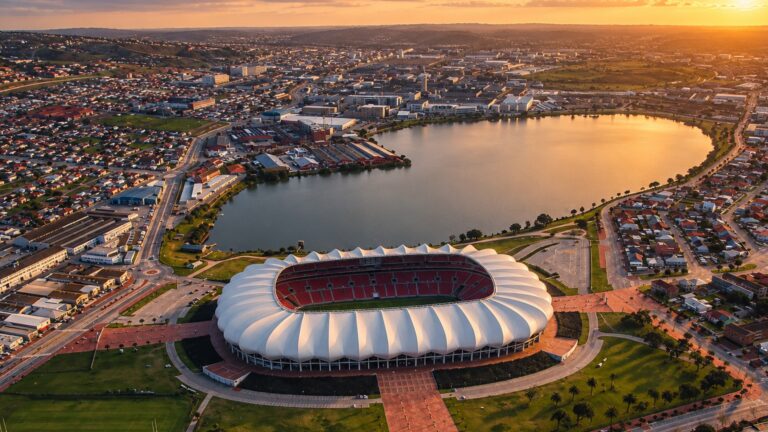
The Mandela Bay Development Agency has highlighted strategic properties including Telkom Park, land around Nelson Mandela Bay Stadium and North End Lake, municipal buildings and other sites as possible contributors to future development.
The broader opportunities could include tourism, hospitality, commercial development, mixed use projects, residential development and improved public spaces.
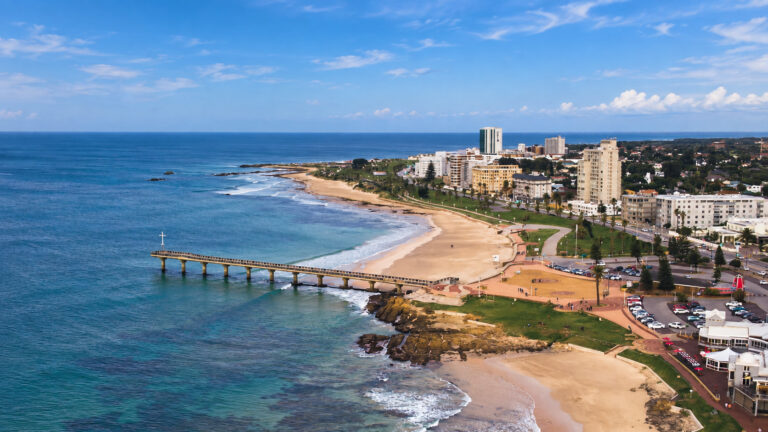
Gqeberha’s beachfront is an obvious example.
The broader Bayworld precinct has previously been identified for major tourism and commercial regeneration, encompassing Bayworld, Happy Valley and the former Telkom Park site.
Earlier plans considered projects including a revamped oceanarium, nature facilities and an international convention centre, with public and private investment expected to play an important role.
The important word, however, is potential.
Identifying land is not the same as developing it. Projects still require planning, feasibility work, approvals, funding and a viable reason for investors to participate.
Public land doesn’t always need to be sold
Unlocking municipal land also doesn’t necessarily mean selling it.
Different properties can require different approaches.
The municipality could retain ownership while granting a long term lease. A development could involve a public private partnership. Some properties could be disposed of through the appropriate process, while others could remain publicly owned but be used more effectively.
The objective shouldn’t be to sell as much municipal land as possible.
It should be to determine which assets the city needs to retain, which are underused and which could support responsible investment and development.
That clarity matters to private investors too.
A developer may be prepared to fund construction and take development risk, but needs certainty around the property, permitted use, infrastructure, approval process and commercial viability.
A valuable piece of land does not automatically become an investment opportunity simply because it exists.
What could this mean for Gqeberha’s economy?
The potential benefit extends beyond the development itself.
A hotel requires employees. A mixed use development creates construction activity before potentially supporting shops, restaurants, offices or residential accommodation. Tourism projects can support accommodation providers, transport operators and other local businesses.
The real economic value therefore comes when development creates sustainable activity after construction is complete.
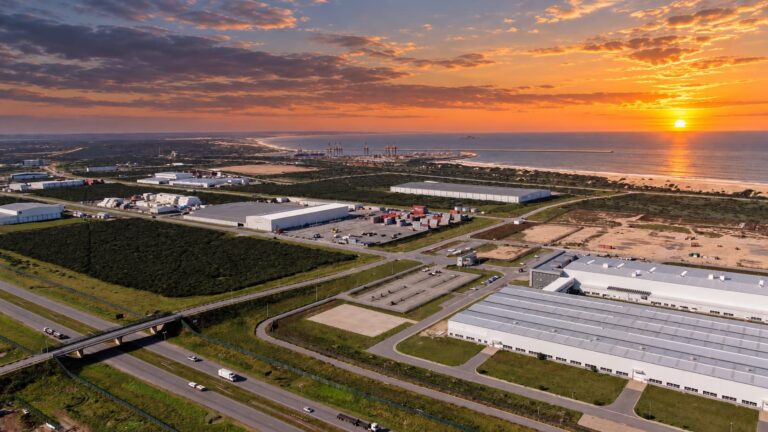
This is particularly relevant in a city such as Gqeberha, where tourism, manufacturing, logistics and other industries all contribute to the wider economy.
If underused Nelson Mandela Bay municipal land can attract viable investment, the benefit could extend to businesses, employment and the broader economic environment.
What could it mean for residential property?
This is where we need to be careful.
Economic development matters to residential property because households ultimately need income and confidence to rent or buy homes.
Successful investment can also improve amenities, infrastructure and the way particular parts of a city function.
But that doesn’t mean:
“Municipal land is being developed, therefore nearby property prices will increase.”
Residential property values are still influenced by comparable sales, buyer demand, affordability, location, property type, condition, security, schools, amenities and available stock.
A development can also affect different properties differently. Some buyers may value improved amenities and investment nearby, while others may be sensitive to increased traffic, density or commercial activity.
In our experience, homeowners are often interested in how new developments could affect the value of their property.
The starting point should remain actual market evidence.
Development provides context. It doesn’t replace comparable sales.
Why this fits into a bigger Gqeberha development story
The municipal land discussion also comes as the MBDA works on its new Nelson Mandela Bay mini masterplan, which is intended to identify strategic development precincts, regeneration opportunities and potential capital projects.
The two conversations ultimately raise the same question:
How can Nelson Mandela Bay make better use of the assets and locations it already has?
Gqeberha already has valuable land, established infrastructure, a coastline, tourism assets and areas with redevelopment potential.
The challenge is turning those advantages into projects that are financially viable and actually delivered.
What should we watch next?
For property owners, buyers and residents, the most important development will not be another announcement about what could happen.
It will be evidence of implementation.
That means watching for specific sites being formally identified, transparent leasing or disposal processes, feasibility studies, development approvals, confirmed funding and eventually construction.
Those milestones will tell us much more about the potential impact on Gqeberha than a proposal alone.
Valuable Land Needs a Productive Purpose
The debate around Nelson Mandela Bay municipal land isn’t simply about selling public property.
It is about whether strategically located assets can contribute more effectively to Gqeberha’s future.
Some land needs to remain available for housing, infrastructure, community facilities and environmental purposes. Other properties may be suitable for leasing, redevelopment or responsible private investment.
The opportunity lies in understanding what the city owns, determining how those assets can best be used and creating a credible pathway for viable projects to move forward.
From a property perspective, LEAP will be watching what happens beyond the announcements.
Because the real benefit to Gqeberha won’t come simply from identifying valuable land.
It will come from turning the right sites into productive places that support investment, businesses, employment and a better functioning city.
Sources and further reading
This article reflects publicly available information as at September 2026. Potential developments and investment opportunities discussed should not be regarded as approved or confirmed projects unless formally announced by the relevant authorities.