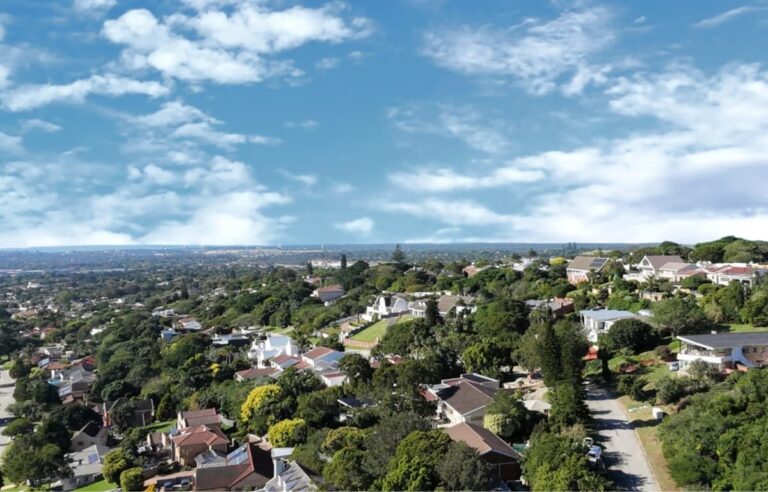
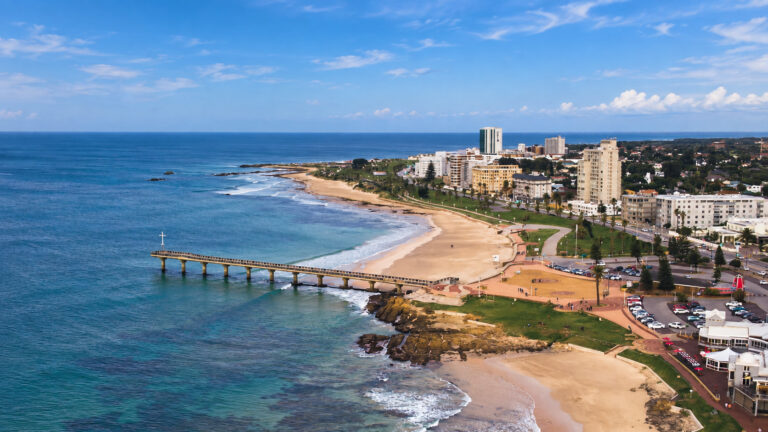
A new planning initiative is taking shape in Nelson Mandela Bay, with the Mandela Bay Development Agency bringing together professionals and residents to identify potential projects that could contribute to the regeneration and future development of the metro.
The Nelson Mandela Bay mini masterplan is still at an early stage. It is not a list of approved construction projects, and there is no guarantee that every idea identified through the process will ultimately be funded or implemented.
But the scope of the initiative makes it worth following.
The process is intended to identify development precincts, regeneration opportunities, public and private investment opportunities and a pipeline of potential capital projects that could be implemented over the next decade. Property market trends and development demand are also specifically included in the work being undertaken.
For Gqeberha’s property market, the significance isn’t that a new masterplan suddenly changes property values.
The more important question is whether the process can eventually translate into real improvements, investment and development across the city.
What is the Nelson Mandela Bay mini masterplan?
The Mandela Bay Development Agency, or MBDA, began the process by calling for professionals to join a voluntary multidisciplinary advisory panel.
Its brief is considerably broader than simply producing ideas for how parts of the city should look.
The panel has been tasked with identifying strategic development precincts, assessing redevelopment and regeneration opportunities, considering municipal land and buildings that could play a role in future development, and identifying opportunities for both public and private investment.
For selected precincts, the process is expected to consider issues such as land use, public spaces, mobility, connectivity and development phasing.
The MBDA also wants the panel to identify and prioritise potential capital projects over a 10 year period. These could include public infrastructure, mixed use developments, tourism projects, heritage regeneration, transport improvements and economic development initiatives.
That makes the initiative more interesting than a conventional vision document.
The intention is to begin identifying projects that could eventually move from concept to more detailed planning and feasibility work.
The first session has already taken place
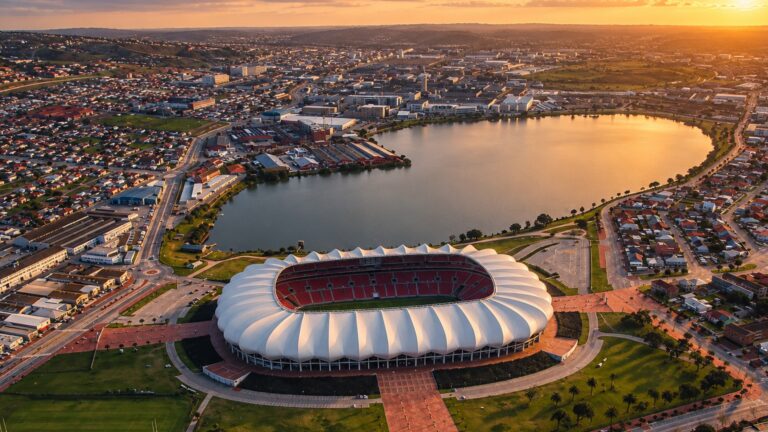
The first session of the Voluntary Advisory Panel was held at Nelson Mandela Bay Stadium on 1 September 2026, following the MBDA’s public call for participants in August.
According to the MBDA, the session brought together citizens and professionals from different backgrounds to begin shaping the mini masterplan.
Importantly, the discussion focused on practical and achievable interventions, as well as how the public and private sectors could work together on interconnected projects.
The outcomes of the first session are intended to inform another gathering later in September.
This means the process remains very much in development.
Specific projects should therefore not be treated as confirmed developments until proposals have progressed through the necessary approval, feasibility, funding and implementation stages.
What could eventually be included?
The MBDA’s original brief gives us a useful indication of what the process is trying to achieve.
Potential projects could include:
- public infrastructure and public space improvements
- mixed use development
- tourism projects
- heritage regeneration
- transport and connectivity improvements
- economic development initiatives
- redevelopment opportunities involving municipal land and buildings.
The panel is also expected to consider potential funding sources, implementation timeframes, economic benefits, job creation potential and the likely interest of private investors.
One particularly relevant part of the brief is its requirement for a market and property assessment.
The panel is expected to consider property market trends, development demand, investment opportunities, potential private sector interest, and risks or constraints.
For LEAP, that is where the initiative becomes especially relevant to the local property conversation.
Why does urban regeneration matter to property?
Property doesn’t exist independently of the area surrounding it.
When someone buys a home, they are also buying into a street, neighbourhood and city.
The condition of public spaces, roads, infrastructure, commercial areas, transport connections and nearby amenities all contribute to how people experience a location.
Over time, these factors can influence where households want to live and where businesses and developers are prepared to invest.
Nelson Mandela Bay’s own long term planning recognises this relationship. The municipality’s development framework identifies spatial integration, better access to economic opportunities, improved connectivity, more efficient land use and catalytic interventions capable of encouraging public and private investment as important parts of the city’s longer term development.
But that doesn’t mean regeneration automatically produces higher residential property prices.
That distinction is important.
A masterplan does not increase your property’s value
If a regeneration project is eventually announced near a particular suburb, homeowners should be cautious about immediately attaching a monetary value to it.
An individual property’s selling price still depends on factors such as recent comparable sales, buyer demand, affordability, condition, size, property type, security, improvements and the competing homes available when the property goes onto the market.
There is also a substantial difference between a proposed project and a completed project.
Planning may take years. Funding can change. Feasibility studies can identify problems. Projects can be altered, delayed or abandoned.
The Nelson Mandela Bay mini masterplan is currently intended to create a strategic pipeline from which more detailed masterplans, feasibility studies and implementation programmes could later be commissioned. The MBDA’s own brief makes clear that the current exercise does not include detailed engineering designs, architectural drawings, environmental studies or feasibility reports.
That is why LEAP would not recommend using the announcement itself as evidence that a particular property should now be worth more.
Where regeneration can make a difference
The more useful property conversation begins when plans translate into delivery.
Consider what happens when an underused public space is properly upgraded, an important transport connection improves, neglected buildings are brought back into productive use or new commercial and mixed use investment enters an area.
Those changes can alter how people use and perceive a neighbourhood.
They can also make further private investment more attractive.
This appears to be part of the thinking behind the MBDA initiative. Potential projects are expected to be assessed according to factors including strategic impact, economic benefit, job creation, ease of implementation and funding readiness.
The emphasis on catalytic projects is particularly important.
A catalytic project is valuable not simply because of the project itself, but because it has the potential to encourage additional activity around it.
From a property perspective, that could eventually mean new development, businesses, employment, improved public environments or greater demand for particular locations.
But those outcomes need to be demonstrated through actual investment and market behaviour rather than assumed in advance.
Gqeberha already has experience with regeneration
Urban regeneration isn’t a completely new concept for Nelson Mandela Bay.
The MBDA was established as a municipal entity with an initial focus on regeneration of the inner city and development of the harbour area, with its mandate later expanding into additional parts of the metro. Municipal planning has previously identified areas including the CBD, Central, Richmond Hill, South End, Humerail, North End and the harbour area as important to the wider growth and development of the city.
The agency’s current strategic approach also includes precinct management, project management services and what it describes as game changing catalytic programmes. The stated objective includes enhancing investment opportunities, stimulating economic growth and creating safer and more attractive places in which to live, work and spend time.
The new mini masterplan process therefore sits within a much longer conversation about how Nelson Mandela Bay should develop.
What will matter now is whether the new process can identify projects that are realistic enough to progress beyond planning.
Public and private investment need to work together
One of the more encouraging elements of the initiative is the recognition that urban regeneration cannot rely solely on one sector.
The first advisory panel session specifically considered how public and private sectors could collaborate.
That matters because the two often play different roles in successful urban development.
Public investment can improve infrastructure, roads, public spaces and municipal assets.
Private investment can bring residential development, offices, retail, hospitality, businesses and employment.
Neither exists entirely independently of the other.
A developer considering a substantial project needs to understand the surrounding infrastructure, market demand and future direction of the area. Likewise, public investment can have greater impact when it encourages additional private capital rather than functioning as an isolated intervention.
The MBDA’s brief acknowledges this directly by requiring the panel to identify both public and private investment opportunities and consider potential private sector interest in proposed developments.
What could this mean for buyers?
For buyers, the Nelson Mandela Bay mini masterplan is something to follow rather than something on which to base a purchase decision today.
Future improvements to infrastructure, public spaces, transport or commercial nodes could contribute positively to particular locations.
But buying a property because a proposed project might happen is speculative.
A better approach is to assess the property and suburb based on what exists now, while understanding what is being planned for the surrounding area.
Look at access, infrastructure, schools, amenities, security, property condition, comparable sales and how well the home fits your own needs and budget.
Then treat credible future development as additional context rather than guaranteed future value.
What could this mean for sellers?
The same principle applies to sellers.
If significant investment eventually takes place in or near your area, it may become part of the broader location story presented to buyers.
Improved public spaces, new amenities, better connectivity and successful commercial development can all influence how buyers perceive an area.
But those improvements don’t replace the fundamentals of pricing.
At LEAP Real Estate, we believe an asking price should remain grounded in relevant comparable sales, current competition and the characteristics of the individual property.
A future masterplan isn’t a substitute for market evidence.
If you’re considering selling, a Comparative Market Analysis can provide a more realistic understanding of how your property is positioned within the market that exists at the time.
What should we watch next?
The next stage will be more important than the initial announcement.
The first panel session has taken place, with another gathering expected later in September. The broader process was designed around three advisory sessions over approximately three months.
From there, the key questions will be:
Which precincts are identified?
Which projects receive priority?
What are the estimated costs?
Where could funding come from?
Which projects attract genuine private sector interest?
And, most importantly, which proposals actually progress towards implementation?
Those details will tell us far more about the potential impact on Gqeberha than the existence of the masterplan alone.
A Plan Worth Following, but Delivery Will Matter
The Nelson Mandela Bay mini masterplan represents an attempt to think more strategically about regeneration, investment and development across the metro.
Its scope is ambitious. It includes development precincts, public spaces, infrastructure, mixed use development, transport, heritage, tourism, economic development and opportunities for public and private investment.
That creates genuine potential.
But Gqeberha doesn’t need plans that remain presentations indefinitely.
For residents, businesses, buyers, sellers and property owners, the real value will come if viable proposals progress into funded projects and visible improvements.
From a property perspective, that is what LEAP will be watching.
Not whether the announcement changes property prices tomorrow, but whether the process ultimately contributes to better functioning areas, meaningful investment, economic activity and places where people increasingly want to live and invest.