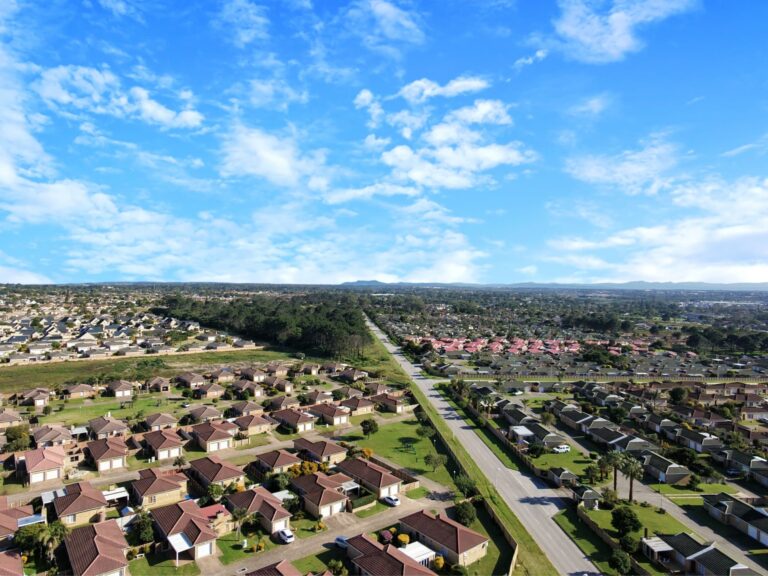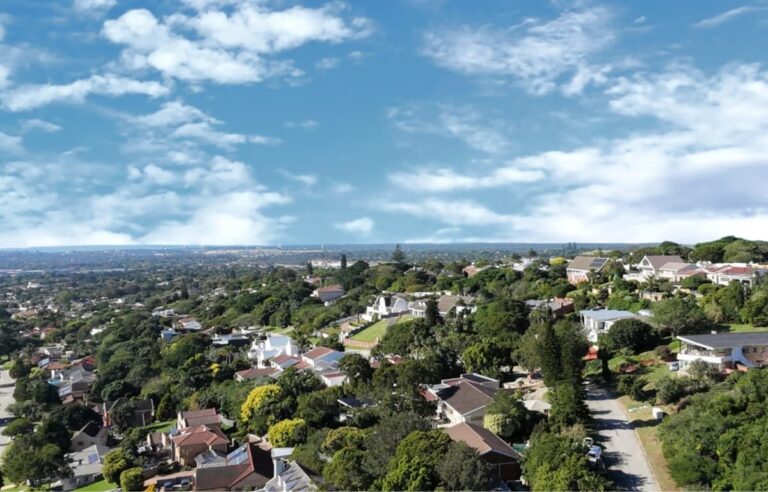
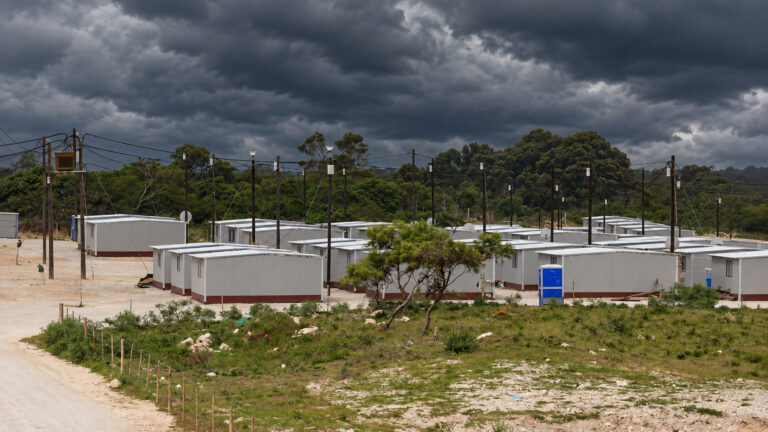
Nelson Mandela Bay Municipality has begun relocating residents and demolishing informal structures in Airport Valley, Gqeberha, as it prepares to proceed with a planned 445-unit housing development.
The project has reportedly been delayed for more than three years. The municipality says the relocation process is necessary to make the land available for development, while several affected residents have raised concerns about the notice they received and the conditions at the temporary accommodation site.
The events of 28 and 29 September 2026 have brought renewed attention to the project, highlighting both the need for additional housing in Nelson Mandela Bay and the challenges involved in relocating established communities.
Importantly, construction of the 445 homes has not yet been confirmed as underway. According to the municipality, the next steps involve completing the relocation process, preparing the sites and installing services before construction can proceed.
What is the Airport Valley housing project?
Airport Valley is an established informal settlement in the Walmer area of Gqeberha.
The municipality has identified the site for a housing development intended to deliver 445 units. The project has faced prolonged delays, including disagreements over the relocation of people currently occupying the land.
According to reporting by The Herald, the municipality had previously approached the courts in connection with the relocation process. In November 2024, it secured an urgent hearing for an eviction application under the Prevention of Illegal Eviction from and Unlawful Occupation of Land Act.
The dispute has continued into 2026.
In July, the municipality publicly reported engaging with residents about voluntarily vacating the site to allow excavation and bulk-service installation to proceed.
The planned development could provide additional formal housing opportunities once completed, but the reported unit count should not be confused with homes that have already been constructed or allocated.
What happened during the September relocations?
On 28 September, the municipality reported that approximately 125 people had already relocated to temporary accommodation nearby.
It also stated that a further 39 residents had been assisted with what it described as consensual demolition and relocation.
However, accounts from affected residents differ.
In its 29 September report, PE Express interviewed residents who said their structures had been demolished without adequate notice.
One resident, Nwabisa Yamiso, said she had lived in Airport Valley for four years and was unhappy with the conditions at the temporary relocation site.
Another resident, Lusanda Tutu, said she had received no notice and would need to find alternative accommodation.
The municipality, meanwhile, maintained that the process was lawful and described it as relocation rather than forced removal.
These are materially different accounts of the same events. The available reporting does not establish that every affected household consented to relocation, nor does it independently establish whether the required legal procedures were followed in every case.
Why have residents raised concerns?
For people living in Airport Valley, relocation involves more than moving a structure from one piece of land to another.
Residents have raised concerns about access to water, sanitation, schools, transport and other everyday services at temporary accommodation sites.
The Herald reported that a March 2025 court judgment addressed concerns about conditions at the Walmer 1948 temporary site, including the adequacy of water and ablution facilities.
Residents have also questioned whether they would ultimately receive housing in the planned development and when they might be able to return.
The municipality has stated that potential beneficiaries would be relocated back once the area has been developed, but a confirmed return date and final beneficiary allocation arrangements were not established in the reports reviewed.
The distinction matters.
A temporary relocation arrangement needs to be assessed not only in terms of making development possible, but also in terms of what happens to affected households while they wait.
What happens next for the 445 planned homes?
According to the municipality, the immediate priority is to complete the relocation process so that work on the housing site can proceed.
The intended sequence is:
- Complete the relocation of affected households.
- Prepare the development sites.
- Install the necessary services and infrastructure.
- Proceed with construction of the housing units.
The municipality has indicated that it intends to move forward with site development once relocation is complete.
However, several important details remain unconfirmed in the reporting available as at 30 September 2026.
These include the final project budget, the current funding allocation, the appointed construction contractor, the construction start date and the anticipated completion date.
It is also unclear whether funding is presently secured for all 445 planned units.
These details will determine how quickly the project can move from site preparation to completed housing.
What happened to the project’s previous funding?
One significant detail in the municipality’s September statement concerns funding that was reportedly returned to National Treasury.
According to the municipality, delays in the relocation process resulted in funding being returned during the previous financial year.
This raises an important question about the project’s current financial position.
Housing projects depend on more than having land available. They also require approved budgets, engineering services, contractors, procurement processes and the coordination of several stages of development.
The return of previously allocated funding does not necessarily mean that the project has been cancelled. Equally, renewed relocation activity does not establish that the full construction budget has been restored.
Until updated funding arrangements are confirmed, the proposed 445 units should be understood as the project’s intended delivery rather than a guaranteed construction outcome.
Why does this matter for housing in Gqeberha?
The Airport Valley development is relatively small when compared with Nelson Mandela Bay’s wider housing needs.
In its September statement, the municipality cited a housing backlog of approximately 100,000 units. That is the municipality’s reported figure, rather than an independently verified count in this article.
Even if all 445 planned homes are delivered, they would address only a portion of that reported need.
Nevertheless, individual housing projects remain important.
Formal housing development involves more than constructing buildings. Suitable access roads, water, sanitation, electricity and other infrastructure are essential to creating functioning residential neighbourhoods.
The Airport Valley project also illustrates why housing delivery can be complicated when land identified for development is already occupied.
Progress requires decisions about land use, relocation arrangements, infrastructure, funding and the circumstances of people who may be affected.
For residents awaiting formal housing, delays can mean additional years of uncertainty. For households facing relocation, the immediate concern may be whether their temporary accommodation is safe, suitable and accessible.
Both issues are relevant to understanding the project.
What could the development mean for the surrounding property market?
From a property perspective, additional formal housing and infrastructure can change how an area functions over time.
Serviced residential development may introduce new roads, utility connections and housing opportunities. The nature of those changes will depend on the final plans and how the development is implemented.
However, the proposed Airport Valley housing project should not be interpreted as evidence that nearby residential property values will increase or decrease.
Property values depend on factors including comparable sales, buyer demand, location, property condition, affordability and the characteristics of the surrounding neighbourhood.
Until the project’s final layout, infrastructure plans and construction programme are confirmed, it would be premature to draw conclusions about its effect on neighbouring properties.
For LEAP Real Estate, the more immediate relevance of this story is the relationship between housing delivery, infrastructure and the longer-term development of Gqeberha.
What should residents watch for next?
The September relocation activity represents movement in a project that has experienced prolonged delays.
But several milestones still need to be reached before the proposed homes become a reality.
The next meaningful developments will be confirmation of the project’s current funding, completion of the relocation arrangements, the start of infrastructure installation and a published construction programme.
Clarity around beneficiary allocation and the conditions at temporary accommodation sites will also be important for affected households.
The municipality’s account of the relocation process and the concerns raised by residents remain different. Further official documentation, including the relevant court orders and relocation arrangements, would help establish how the process is being implemented.
A Housing Project Still Awaiting Delivery
The Airport Valley housing project brings together two issues that cannot be considered separately: the need for additional formal housing and the circumstances of residents already living on land earmarked for development.
The municipality intends to deliver 445 housing units, but the available information does not yet establish when construction will begin or when the homes will be completed.
For Gqeberha, the next measure of progress will be whether the project moves beyond relocation and site preparation into funded infrastructure work and completed housing.
At the same time, the arrangements for affected residents remain an essential part of the story.
The proposed development will ultimately be measured by the housing delivered and how the people affected by the process are accommodated.